
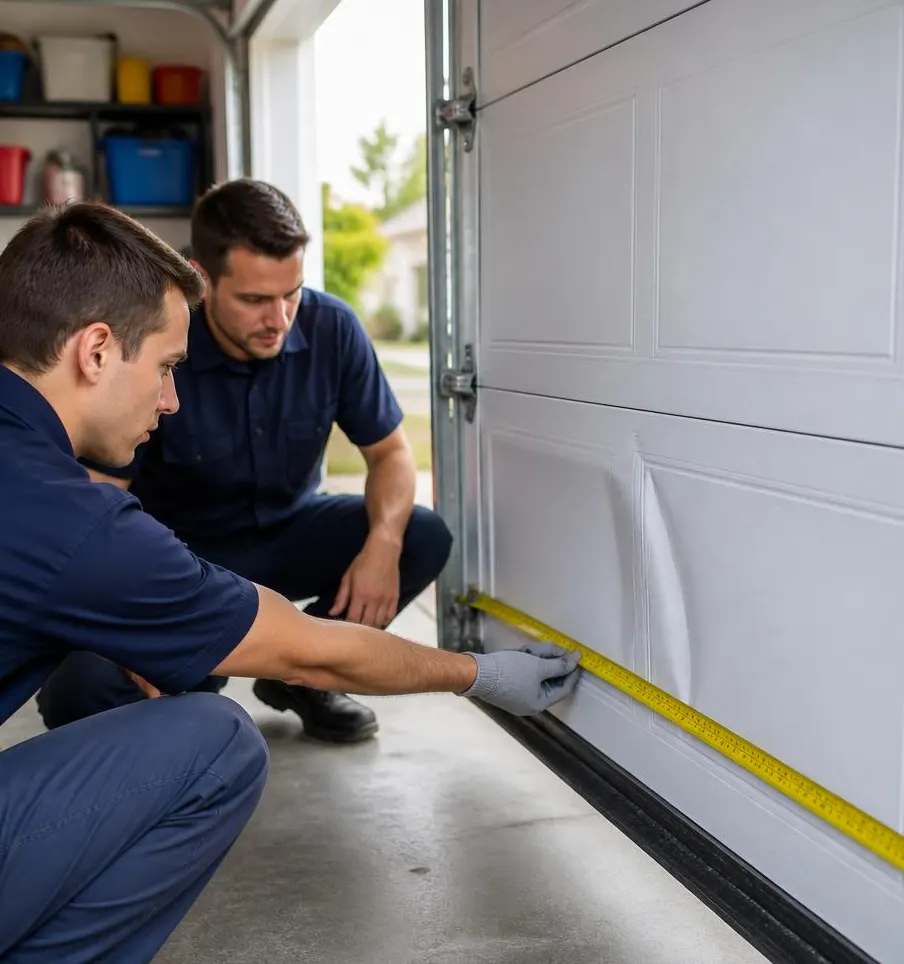
A typical call starts the same way: a homeowner heard a bang during a wind event, and now the garage door won't open, or it opens but one panel is visibly bowed outward like it took a punch. Sometimes a track bracket has pulled loose from the framing. Sometimes the door looks fine from the outside but the opener's trolley has popped off the rail because the door tried to lift under pressure it wasn't built to handle. None of this is random bad luck. It's physics, and it happens every year once the fall wind storms roll through.
Why the Garage Door Is the Weakest Wall on the House
Every other wall in a house is a continuous, fastened structure. The garage door is a moving panel held in place by rollers in a track, tensioned springs, and a handful of brackets. It's also usually the largest single opening in the entire structure. When wind hits a house, pressure builds on the windward side and drops on the leeward side. A solid wall resists that pressure evenly across thousands of fasteners. A garage door resists it through a much smaller set of hinges, rollers, and track anchors — and those are the parts most likely to be a little worn, a little loose, or a little rusted from years of winter salt spray.
When the door fails under wind load, it doesn't just break a panel. A door that blows in or bows outward changes the pressure inside the garage itself, which is part of why severely damaged garage doors show up so often in storm damage reports — once that envelope breaches, the roof and walls lose some of the resistance they were counting on.
What Fall and Winter Wind Does Differently Than Spring Storms
Spring in this area brings the dramatic stuff — thunderstorm lines and tornado watches with sudden, sharp gusts. Fall and winter wind is different: it's often sustained, it comes with falling temperatures that make steel brittle and hardware stiffer, and it's frequently paired with the season's first freeze-thaw cycles. A track bracket that was barely hanging on in September can finally give way in a November wind event, especially once cold has already made the rollers harder to turn and the springs less forgiving. This is the window to catch problems before winter ice and heavier use pile on.
Pre-Winter Storm Checklist
- Track brackets and lag screws: Check that every bracket anchoring the track to the framing is tight. Loose brackets are one of the most common points of failure in high wind.
- Rollers and hinges: Look for rollers that are cracked, flat-spotted, or worn down to the metal core, and hinges with elongated screw holes. Worn rollers bind under wind load instead of moving smoothly.
- Weatherstripping and bottom seal: Cracked or stiff seals let wind-driven rain and cold air in, and often signal the rest of the hardware has aged out too.
- Panel condition: Hairline cracks or soft spots in steel or composite panels are the places that buckle first under pressure.
- Reinforcement struts: Horizontal struts bolted to the back of panels add real wind resistance. If your door doesn't have them, this is worth discussing before storm season, not after a failure.
- Opener battery backup: Wind storms cause power outages. A battery backup on the opener means you're not stuck manually hauling a heavy door open in sideways rain.
- Spring tension: Springs under the wrong tension make the door work harder in gusty conditions and are more likely to snap during cold snaps — a separate but related failure that tends to show up right alongside storm damage calls.
The Trade-Off on Reinforcement Kits
Aftermarket wind-reinforcement kits and strut upgrades run in the low hundreds of dollars as a general national range, not thousands. They won't make a standard residential door tornado-rated, but they measurably raise the wind pressure a door can take before buckling — a reasonable middle ground for homeowners who want more protection without replacing the whole door.
When to Call Plainfield Garage Door Service
If your door already shows a bowed panel, a bent track, or hardware that's visibly loose, that's not a wait-and-see repair — wind damage tends to get worse with the next gust, not better. Our Garage Door Repair technicians can assess whether the track, panel, or springs took the hit, and our Garage Door Maintenance service catches the loose brackets and worn rollers before a storm turns them into an emergency. If a storm already knocked your door out of commission, our Emergency Garage Door Service gets a technician out to secure the opening and get the door functional again.
If you're in Plainfield, Naperville, Bolingbrook, Romeoville, Joliet, Oswego, Aurora, or Shorewood and want your garage door checked before the next wind event, call Plainfield Garage Door Service today.